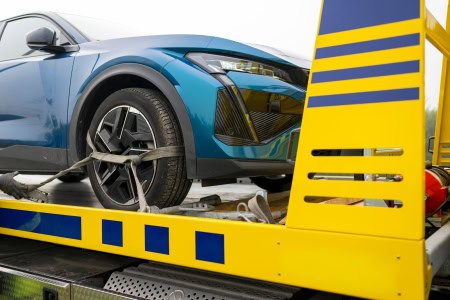
It’s 8.15 on a Tuesday morning. One of your coaches has broken down before a school pick-up, and the driver is on the phone. The school wants to know when the coach will arrive. Meanwhile, the same vehicle is booked for another job that afternoon. You’ve got three decisions to make before you even know what’s wrong with it.
Commercial vehicle recovery helps you get the vehicle to a workshop or depot while your team works out how to cover the rest of the day. The earlier you know where it’s going and who can receive it, the sooner you can make decisions about passengers, deliveries and upcoming bookings.
At Eurocoaches, we operate coaches from our base in Yate, near Bristol. We know how quickly losing one vehicle can affect the rest of the schedule. Whether you’re arranging coach recovery or dealing with a loaded HGV that’s going to miss its delivery slot, here’s how to handle the breakdown and keep the rest of your fleet moving.
What do commercial vehicle recovery services do?
Commercial vehicle recovery services help move a vehicle that can’t continue its journey. That might mean collecting a coach from a venue, moving a minibus from your depot to a repair centre or taking an HGV from a customer’s premises to a workshop.
When a fault can be assessed and resolved where the vehicle has stopped, some providers offer 24 hour support every day of the year and can carry out roadside repairs before recovery is needed. If it needs further investigation or repairs, recovery gets it to a location where that work can take place. The provider will need to understand the type of vehicle involved, what happened and what access is like at the collection point. For larger incidents, heavy recovery may involve specialist winching and load transfer equipment. After an accident, they may also clear the scene and arrange secure storage.
From a fleet manager’s point of view, there’s another decision to make while recovery is being arranged. What work was that vehicle due to do next? If a coach has three bookings in one day, the current group is only the first to be affected. If a lorry is scheduled to collect another load after its delivery, your traffic office needs to check that booking too. Looking at the rest of the schedule early gives you more time to move work around and tell customers what to expect.
What to have ready when you call for vehicle recovery services
When arranging commercial vehicle recovery, start with the exact location and type of vehicle. Your driver can share a location pin or identify the correct entrance while someone in the office checks the registration, breakdown cover and preferred destination. Dividing up these tasks can help the recovery team get the right vehicle and equipment to the scene sooner.
Have these details ready when you call:
- Vehicle details: registration, make, model and whether it’s a coach, bus, minibus, rigid HGV, articulated lorry, truck or van.
- Exact location: road name, direction of travel, location pin, carriageway or site entrance. For roadside incidents, include the nearest junction or landmark.
- What happened: the fault or damage, dashboard warnings, whether the vehicle can move, and whether it is overturned or jack-knifed.
- Passengers or load: the number of passengers on board, or the type and approximate weight of the HGV’s load. Say whether a trailer is attached.
- Access conditions: gates, height restrictions, loading bays, narrow roads or limited room to manoeuvre. Mention any heavy plant or equipment involved.
- Destination: the preferred workshop or depot, its opening hours, access arrangements and the name of the person who can receive the vehicle.
- Contacts and authorisation: the driver’s phone number and the person in your team who can approve recovery, including out of hours.
You don’t need to diagnose the fault before calling. A clear report such as, “The coach lost power as it left the venue and is stopped beside the service gate,” helps the recovery team assess the job and gives your workshop a useful starting point. For an HGV incident, sharing the load, trailer and access details can help determine whether standard recovery, heavy wreckers, winching or load transfer equipment may be needed.
If the vehicle is carrying passengers, tell the provider how many people need help and whether onward transport is required. If a load needs to keep moving, ask whether the provider can supply replacement transport or arrange a transfer. Clear information can reduce delays, limit downtime and help fleet operators keep other bookings on schedule.
Coach recovery when passengers need to continue their journey
With coach recovery, you’re often arranging two journeys at once while also looking after passenger welfare. Whether it’s coaches or buses, the vehicle needs to get to a workshop, and the passengers still need to reach their destination. We’d start both conversations as soon as you know the original vehicle can’t complete the booking.
The type of journey makes a difference. If it’s a school trip, the school may have parents waiting at a fixed pick-up time. If it’s an airport transfer, you’ll want to check flight times, terminals and how much luggage needs to move. For a private hire booking, you may need to confirm whether the venue can accommodate a different meeting point.
Before sending a replacement coach or minibus, check the number of seats you need, the luggage capacity and any accessibility requirements. A vehicle might have enough seats for the group but too little room for its bags. If you’re using more than one replacement vehicle, give the group organiser the full pick-up plan so they know who is travelling with whom.
Agree the meeting point with both the organiser and the replacement driver, and arrange the replacement before you deal with the broken coach itself. At a large venue, the main entrance, coach park and service gate can be in different places. Give the organiser one number for updates and tell them when you’ll call again. A simple update like ‘We’re checking which coach can reach you and we’ll call you back in 15 minutes’ gives them something concrete to pass on.
Speak to us about coach recovery.
HGV recovery for loaded lorries and trailers
When you call for HGV recovery, explain whether you’re dealing with a rigid lorry or a tractor unit and trailer; some operators also cover HGV recovery across the UK and Europe. If it’s loaded, give the provider the type of goods and the approximate weight if you have it. Confirm whether the trailer is still attached and whether it needs to travel with the tractor unit. Some incidents need heavy recovery rather than standard towing, using gear such as specialist winching.
Location matters here, too. A vehicle in an open yard is a different job from one backed into a loading bay with little space around it, and off-road, overturned, or jack knifed lorries may need extra planning to recover. Some providers also cover buses on UK and Europe routes. At a distribution centre or customer site, ask the site contact which entrance the recovery team should use and whether someone needs to meet them. If the site is about to close, find out who can provide access later.
While recovery is being arranged, your traffic office can check what needs to happen to the load, and load transfer may be needed before the vehicle can be recovered safely. The customer might be able to move the delivery slot. You might need to send another vehicle, or ask the receiving site whether it has space to hold the trailer. Decide who will speak to the customer and who will confirm the recovery arrangements, so the driver isn’t fielding every call.
Check what the lorry and driver were booked to do afterwards. If they were due to make a second collection, update that customer as soon as you know the booking is at risk. A delay is easier to work around while there’s still time to change the collection slot, though a serious incident may also mean the scene or carriageway must be made clear before normal traffic can resume.
Get in touch about HGV recovery.
Arranging commercial recovery in Bristol and Yate
If you need commercial recovery in Bristol, give the provider the exact collection point and where you want the vehicle taken. Some commercial recovery providers cover the UK and can take trucks, coaches, and motorhomes to any chosen destination. Some also handle nationwide recoveries from Birmingham. Northampton is another depot location used to show wider coverage. A postcode might identify the right business park in Avonmouth without telling the driver which gate to use. A location pin, unit number or contact at the entrance can save a round of calls. On a road, include the direction of travel and nearest identifiable junction if you know them.
We’re based in Yate, and we know how different the arrangements can be at each end of a recovery. Your vehicle might be easy to reach in a customer’s yard, but the workshop you want to use may be locked by the time it arrives. Before you agree on the destination, check whether someone can receive the vehicle, where the keys should go and whether there’s room for a trailer if one is coming with it.
When asking for a commercial vehicle recovery quote, share the registration, vehicle type, collection point and destination. Ask how the job is priced around the vehicle, route, access, and timing, and what’s included, especially if access is restricted or the job is outside normal hours. If the vehicle is leased or you already have fleet breakdown cover, check who needs to authorise the recovery before booking it. Some providers operate 24 hours a day, including bank holidays, which matters for out-of-hours Bristol recoveries.
Request a free recovery quote.
Give your workshop a handover it can use
The driver’s account can give your workshop a useful starting point. ‘The engine lost power after 30 minutes and wouldn’t restart’ gives them more to work with than ‘It won’t start’. A good handover should also cover the range of symptoms, warning messages, and any previous faults noticed before recovery, along with what the vehicle was doing when the fault appeared and whether it has happened before.
Confirm who’s receiving the vehicle and how the workshop can reach the driver or transport office if it has questions. Agree a time for the first update. Some providers also send a tracking link or live updates, so vehicles can be tracked in real time during recovery. Even if the workshop is still investigating, a scheduled call gives you a chance to review how long you’ll need the spare vehicle and whether tomorrow’s bookings are affected.
For a coach operator, that might mean keeping a replacement on a school route for another morning. For a haulage operator, it might mean moving several deliveries onto a different lorry. Once you have the workshop’s assessment, you can go back to customers with a clearer idea of what you can cover and when.
Build a commercial recovery plan before you need one
We’d keep your fleet breakdown plan to one page and put it somewhere drivers already look, whether that’s the vehicle folder or your driver app. At the top, give them the first number to call, who to contact 24 hours a day, seven days a week, and the details to report. In the office copy, include who can authorise recovery when the usual fleet manager is away.
It helps to record which spare vehicles can cover which jobs. For coaches and minibuses, compare seating, luggage capacity and accessibility. For HGVs, think about the type of trailer, the load and site access. That gives your team a shortlist when a vehicle drops out halfway through the day.
Keep a list of workshops, their opening times and how they handle out-of-hours arrivals. If you manage vehicles across several depots, include the correct entrances and a local contact for each site. The same plan can also note regional support arrangements, such as cover in Tyne & Wear, if your fleet operates there. Check those details periodically, especially when a workshop changes its hours or a new site starts taking deliveries.
After each breakdown, ask your driver and office team what took the longest to sort out. Perhaps nobody knew who could authorise the job after hours, or the replacement coach went to a different gate from the group. Add that detail to the plan while it’s fresh. The next time you need commercial vehicle recovery services, your team will already have the answer.
Contact our team for tailored advice.
Frequently asked questions
1. What’s the difference between roadside assistance and commercial vehicle recovery?
Roadside assistance involves assessing the problem where the vehicle has stopped and fixing it there if possible. Equipped service vans may complete roadside repairs at the breakdown location, avoiding a trip to a garage when the fault is straightforward, while commercial vehicle recovery involves moving it to a workshop, depot or another agreed location. The right option depends on the fault, the vehicle and where it’s stopped.
2. Can you arrange coach recovery and onward transport at the same time?
Yes. Your transport office can start arranging a replacement coach or minibus while the recovery provider assesses what’s needed to move the original vehicle. Some coach recovery jobs use low loaders, especially when a bus or coach cannot be towed conventionally. Confirm passenger numbers, luggage, accessibility requirements and the meeting point before sending a replacement.
3. Can a loaded HGV be recovered?
It depends on the vehicle, the load, the equipment required and access at the breakdown location, and unusual jobs are priced according to the vehicle, location, access, and any specialist equipment or extra staff required. For specialist work such as winching, charges can apply after a minimum hour. When you call, explain what the HGV is carrying, give its approximate loaded weight if known and confirm whether the trailer needs to move with it. Some heavy-vehicle jobs become incident recovery when there has been a serious road accident. Providers may also coordinate with insurers and arrange secure storage while claims are assessed.
4. How much does commercial recovery in Bristol cost?
The price depends on the vehicle type, the equipment required, access and the distance to your chosen destination. When requesting a quote, share the vehicle details and both locations. Ask what the quote covers and whether any out-of-hours arrangements affect the price.
5. Can I choose where my commercial vehicle is recovered?
Tell the provider which workshop or depot you’d prefer, or any UK destination if your provider allows it. Before the vehicle is moved, confirm that the site can receive it and has enough space for any attached trailer. If it’s arriving after closing, agree where the vehicle should be left and who will receive the keys. Some providers can also arrange storage if the vehicle cannot go straight to the chosen site.