Your driver calls to say the lorry has broken down. They’ve given you the name of the industrial estate, but the postcode takes you to the main gate and the vehicle is behind a loading bay. The customer is asking whether the delivery will still arrive today. You’re trying to answer both questions while you find out where the lorry needs to go.
When horses are on board, equine rescue services provide specialist support alongside commercial vehicle recovery. Depending on the provider and your cover, this can include arranging safe onward transport and coordinating care after a breakdown. For drivers, fleet managers and transport operators running horseboxes and other commercial vehicles, having a few details ready can make the first call easier. Start with the exact location, vehicle type and what the driver noticed. Then explain what’s travelling with it: a trailer, goods, passengers or horses. These details help the recovery company assess the job, confirm available support and explain what it can arrange.
We operate coaches from our base in Yate, near Bristol, so we know how quickly one vehicle breakdown can affect the rest of a day’s work. When live cargo is involved, accurate recovery information matters even more. It can help reduce delays, protect animal welfare and clarify where the vehicle, horses and driver need to go next. Here’s what to prepare before calling, what to ask about breakdown cover and recovery, and what you can organise while you wait for an update.
1. Confirm exactly where the vehicle has stopped
A street name or postcode is a starting point. If your vehicle is at a customer’s premises, ask your driver for the unit number, entrance name or a location pin. On a road, give the road number, direction of travel and nearest identifiable junction. If you’re on a motorway, follow the appropriate safety guidance, alert emergency services where necessary and tell the recovery provider your precise location.
Think about how the recovery truck will reach the vehicle. A coach parked in an open yard is easier to describe than one at the back of a venue with three entrances. A lorry may be at the right address but tucked behind a gate that only site staff can open. Tell the provider about height restrictions, limited space, ground conditions such as mud, or access arrangements you already know about. If a staff member can direct the recovery driver, pass on their contact details.
When arranging commercial vehicle recovery around Bristol and Yate, check that you have the correct address. A customer’s office, depot and delivery entrance may all be listed separately. Confirm the collection point with the person who can see the vehicle, and share a map pin if possible. Local recovery services may offer quicker response times for shorter distances, but confirm availability and estimated arrival before making plans.
2. Give the recovery company the vehicle details
Have the registration, make, model and vehicle type to hand. For a coach or minibus, give the model or passenger capacity if known. For a lorry, explain whether it’s a rigid vehicle or a motor tractor unit with a trailer. If it’s a horsebox, say whether it’s self-propelled or a trailer pulled by a separate vehicle.
You can make the first call while someone else checks fleet records for details such as plated weight or trailer dimensions. Tell the recovery company which information you’ve confirmed and which you’re still checking. That gives the provider a chance to explain what it needs to assess the job.
Describe what the driver noticed in their own words. “The coach lost power as it pulled away and a warning appeared on the dashboard” gives the provider a more useful starting point than a guess about what needs replacing. Say whether the vehicle can move and where it’s positioned. Standard breakdown recovery is typically used when a vehicle cannot be driven because of mechanical or electrical failure; what caused the breakdown can also affect the recovery terms or destination options. If the fault has happened before, mention when it occurred and whether the workshop has already inspected it. A technician can assess the job more efficiently when the description is clear.
Share your vehicle and breakdown details with us.
3. Tell the provider what’s travelling with the vehicle
When you call a breakdown recovery service, explain what the breakdown affects. A lorry carrying goods, a coach with passengers and a horsebox with horses on board each needs a different onward plan. Standard breakdown recovery usually covers mechanical or electrical failure, while roadside assistance aims to fix minor problems on-site, such as a flat tyre. If a roadside repair is not possible, car recovery or commercial vehicle recovery can transport an immobile vehicle to a safe destination. Costs are not always fixed; they can depend on vehicle type, location, distance and cover.
For a loaded lorry, give the provider the type of goods, approximate loaded weight if known and whether a trailer is attached. Ask whether the tractor unit and trailer need to go to the same place. Your customer might be able to move the delivery slot, or your transport office might arrange another vehicle for the load. Share the details the recovery provider needs while someone else checks what the customer can accommodate.
For a coach or minibus, tell the provider how many passengers are on board and whether anyone has accessibility requirements or luggage. Agree a time for the next update with the group organiser. If you’re still checking replacement vehicles, say so and tell them when you’ll call back. Once you have a replacement, confirm the seats, luggage space and accessibility requirements against the booking. Give the organiser and replacement driver the same pick-up point, especially at a school or venue with several entrances.
For a horsebox or horse trailer, state the vehicle or trailer type, the number of horses and whether the towing vehicle is still attached. Ask about suitable onward equine transport and who can receive the horses. If the vehicle is empty, give its type, dimensions or weight if known, and preferred destination. For any vehicle, mention access restrictions and whether a workshop or depot can receive it.
Speak to our team about your recovery needs.
4. Ask about equine rescue services if horses are on board
If you break down while travelling with horses, tell the provider straight away. A motorway breakdown involving horses can be particularly dangerous. Keeping horses loaded is generally essential for safety until professional help advises otherwise; do not unload them beside live traffic. Ask whether your breakdown arrangements cover the horsebox or towing vehicle, the trailer and onward transport for the horses. If you have specialist horsebox cover, check who you need to call first and have your policy reference ready.
An equine rescue service may help arrange suitable onward transport, depending on what the provider offers. Ask who coordinates it, what information they need, whether there is a separate charge and whether the transport is fully insured. Give them the number of horses, your exact location and where the horses need to go. If you’ve already booked vehicle recovery, share the provider’s contact details so both teams know what’s arranged.
The vehicle and horses may need different destinations. Your horsebox could be heading to a workshop near Bristol while the horses need to go back to your yard. Confirm who will be available at the yard and who can receive the vehicle at the workshop. Once the plan is agreed, give each contact the information they need for their part of the journey.
If you regularly travel to shows or events, check your equine rescue services arrangements before your next trip. In the UK, a network of equine welfare charities handles emergency rescues. The National Equine Welfare Council is an umbrella body for many equine charities. The RSPCA handles statutory cruelty investigations and emergency seizures, which is a separate route from transport-related recovery planning. Many equine rescue charities provide lifelong sanctuary care for equines that cannot be rehomed. Redwings Horse Sanctuary, the UK’s largest horse sanctuary, cares for over 1,000 equines. Find out which provider covers your routes and who to call 24/7 while you have time to read the terms and ask questions. Check that any transport arranged for horses meets applicable DEFRA approval requirements. Never assume an ordinary breakdown truck can safely transport livestock.
5. Check what your breakdown recovery cover includes
If the vehicle is leased, insured under a fleet policy or covered by a separate breakdown plan, check who can approve the job. Your paperwork may give you a specific number to call or require authorisation before booking. Annual breakdown cover provides assistance for a yearly fee. The right choice depends on your circumstances, budget and how much risk you are willing to take between annual cover and pay-as-you-go recovery. Keep the policy number or fleet reference alongside the driver’s breakdown checklist so your office can find it quickly.
When comparing breakdown recovery services, ask how each provider handles the jobs you actually do. If you run coaches for evening events, ask about collections after a venue closes. If your lorries regularly travel with trailers, ask how those are covered. If you tow a horse trailer, ask what happens if the towing vehicle is the part that breaks down. National recovery services can transport vehicles across the UK, so check this if your routes take you far from base. AA, RAC and Green Flag are examples of mainstream providers drivers may compare with specialist cover. Check the specific policy terms: instant membership after a breakdown may cost more than arranging cover in advance, and a policy may not include trailers, home assistance, onward travel or horse-related needs. Some policies require you to contact emergency services before calling the breakdown provider, particularly where people or animals are in immediate danger; check your policy and follow official safety guidance.
We’d ask recovery companies the same questions so you can compare their answers:
- Can you recover this vehicle type, including its size and weight?
- Can you collect it from this location and take it to our preferred workshop, depot, home or other destination? Do you offer national recovery, and are there distance limits, such as a 10-mile cap after a flat or damaged tyre?
- Does the service include roadside assistance, vehicle transport or both?
- How are trailers and out-of-hours collections handled?
- What does the quote include, and which circumstances could change it?
Have the collection point, destination and vehicle details ready when you request a price. Pay-as-you-go recovery services charge per incident when there is no policy in place. If a second provider is needed for onward transport, ask for that price separately so you know who is quoting for each part of the job. Check the complete policy wording, including exclusions and any requirements that could affect a claim. If an operator offers livestock transport without the required approvals, do not assume the arrangement is legal or suitable; ask for evidence and verify the provider’s credentials.
6. Confirm where the vehicle is going and who will receive it
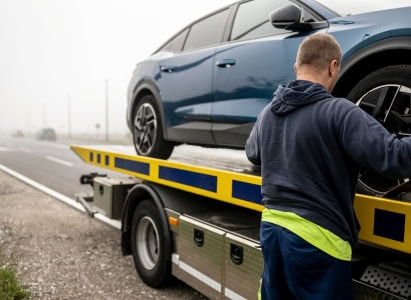
If you already use a workshop, call before the vehicle is collected. If it has been in a collision, ask whether the provider can arrange accident recovery to move it safely to the workshop. A professional operator using flatbed recovery trucks can help prevent damage during transport, especially when the vehicle should not be towed with its wheels on the road. Check that the workshop can receive it, has room for an attached trailer if needed and knows when it might arrive. If it’s after closing, agree who can provide access, where the vehicle should be left and who will take the keys.
Send the workshop a brief note from the driver. Include when the fault appeared, what the vehicle was doing at the time and any warning messages. That gives the workshop a starting point and saves your office from having to find the original details again later.
Ask when you can expect an initial update. If you have a coach booked for a school run the next morning or a lorry due back on a regular route, an agreed update time gives you a point at which to decide whether to keep a spare allocated. You can then tell your customer what’s confirmed and when they’ll hear from you again. For longer journeys, ask whether national recovery can take the vehicle to your chosen destination rather than only to the nearest garage.
Get in touch to discuss your recovery destination.
Keep a breakdown and roadside assistance checklist your team can use
Keep the checklist somewhere your drivers already look, such as the vehicle folder or driver app. Put the main phone number to call for help at the top, followed by any out-of-hours contact and the person who can authorise recovery.
Below that, give drivers a short list of what to report: exact location, registration, vehicle type, what happened, whether the vehicle is stuck or still moving, and who or what is on board. Your office copy can include workshop contacts, depot entrances and options for arranging replacement transport. If you travel with horses, add your horsebox cover details and the number for your equine rescue service. Include a note that drivers should not walk horses beside live traffic or unload them at an unsafe roadside location.
After a breakdown, ask what took the longest to sort out. Perhaps the driver had the right postcode but the wrong gate, or you knew which workshop to use but had no contact after closing. Add that detail while it’s fresh. Review the checklist once a week during busy periods and update it when phone numbers, routes, depots or cover arrangements change. A checklist gets more useful when it reflects the places your vehicles go and the decisions your team actually has to make.
Contact our team for tailored advice.
Frequently asked questions
1. What should I check before calling for commercial vehicle recovery?
Confirm the exact location, vehicle type and registration. Have a brief description of the fault ready and say whether passengers, goods, horses or a trailer are involved. Share your preferred workshop or depot if you know where you want the vehicle taken. Roadside assistance may fix a flat battery or tyre on the spot, but if the vehicle cannot be driven the provider may arrange recovery to a garage.
2. Can every recovery truck move a coach, lorry or horsebox?
No. Recovery equipment varies, so give the provider the vehicle type, size and weight if known, along with details of any attached trailer and access restrictions. The recovery company can then assess what equipment it needs. This may include a flatbed with a long platform to load and transport the vehicle safely. Horses generally require separate, suitable equine transport rather than an ordinary recovery truck.
3. What’s the difference between breakdown recovery and an equine rescue service?
Breakdown recovery deals with the vehicle after a mechanical problem, electrical failure or collision. An equine rescue service focuses on arrangements for the horses, including onward transport where available and covered. This support works alongside vehicle recovery rather than replacing it. Ask who is responsible for each part of the job.
4. Can I choose where my vehicle is taken?
You can request your preferred workshop or depot as the destination. Confirm that the provider can take the vehicle there and that someone at the destination can receive it. If it’s arriving after hours, agree access and key handover in advance. Your policy may set a limit on destination or distance, so check the terms before authorising recovery.
5. What affects the cost of commercial vehicle recovery in Bristol and Yate?
The cost is not fixed. It can depend on vehicle type, distance, access, timing, equipment needed and what caused the breakdown. Price may also vary by time of day, including late-night or out-of-hours recovery. Some policies set distance limits, such as a 10-mile limit when the problem was a flat or damaged tyre. Give the provider the exact collection point and destination when requesting a quote. Ask whether out-of-hours collection, trailer recovery or onward equine transport would affect the price.